For independent restaurants that need operational clarity.Restaurants don't fail overnight.They quietly drift.Spot margin, pricing, and cost drift early — before it gets expensive.Plan the model, cost the menu, check sales — then see what changed each week. Built so a busy operator can decide where the next five minutes matter most.

Free for 30 days when you create an account — plan, dishes, sales and weekly Signals included. Or start with the Quick Model (no account needed).
Most restaurants don't collapse.
They drift.
Supplier prices move. Labour creeps. Menu pricing lags. Teams stay busy while margin quietly slips. Clove is built to make that drift visible — break-even, dish GP, and what changed this week — before “busy but not profitable” becomes normal.

Stay on top of what matters most
Where your attention is needed today
Not dashboards for their own sake — practical checks on whether the numbers still hold, prices still fit, and margin is still where you think it is.
Clove was built from more than 20 years inside restaurant kitchens and operations — understanding pass pressure, labour reality, and how margin quietly moves when nobody has time to stop and look.
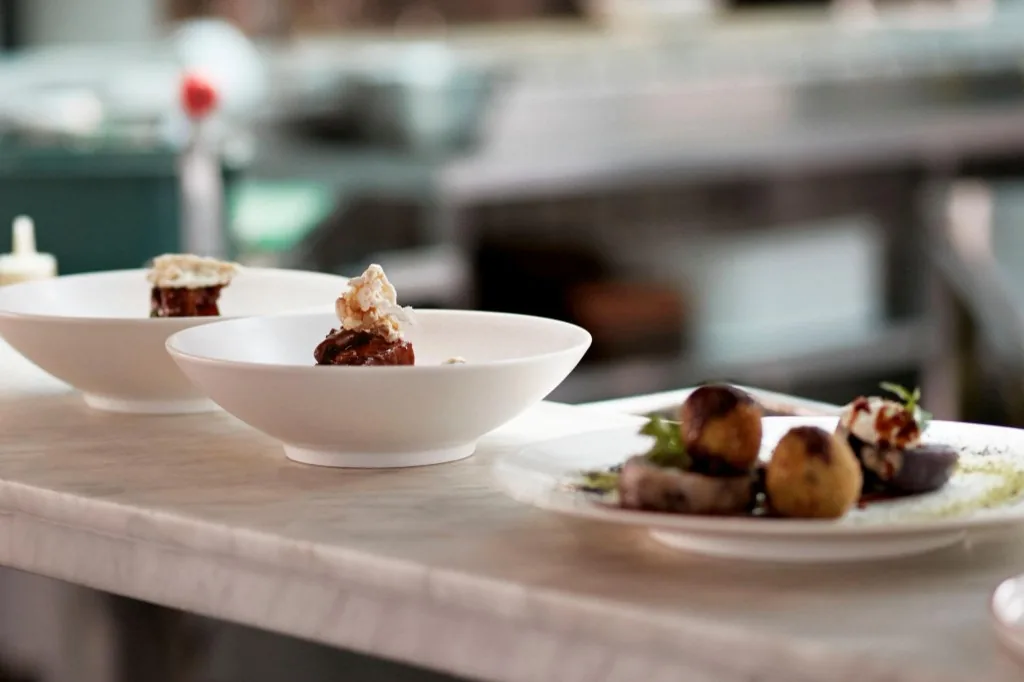
GP%: 72%
Contribution: €6.25
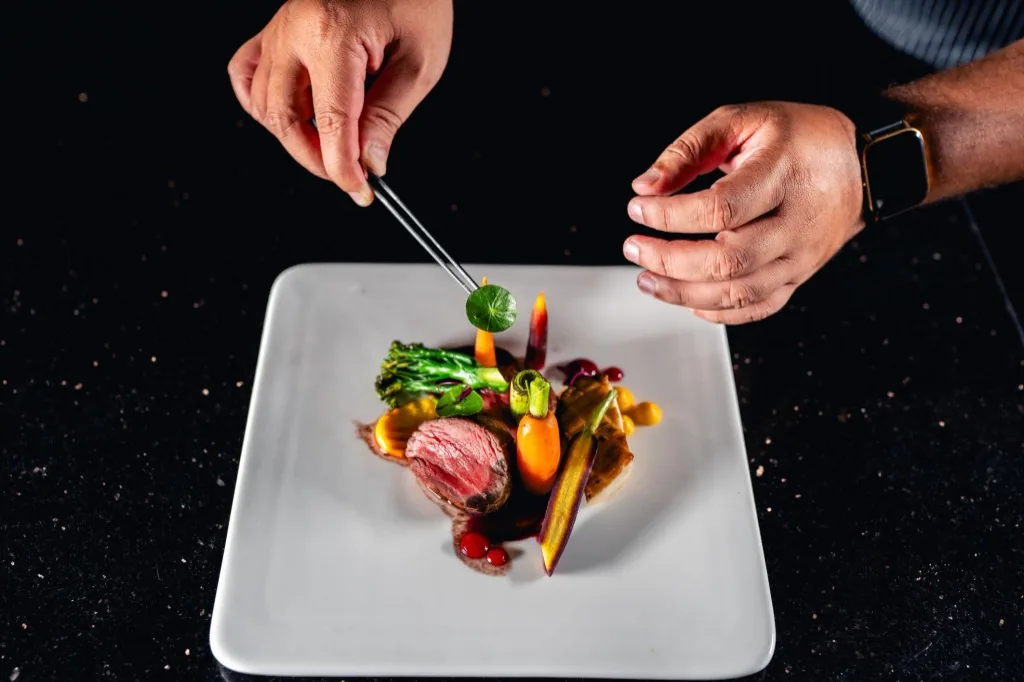
GP% below 65%
Contribution: €12.15
From first model to weekly drift checks
Build the numbers. Lock the operating model. Cost the menu. Then see what changed — before margin quietly drifts away.
Step 1
Test the basics
Is the idea viable?
Step 2
Detailed Model
Is the idea still viable with more detailed costs and revenues?
Step 3
Lock in an operating model
Freeze assumptions so you have a baseline to compare reality against.
Step 4
Work out the margins
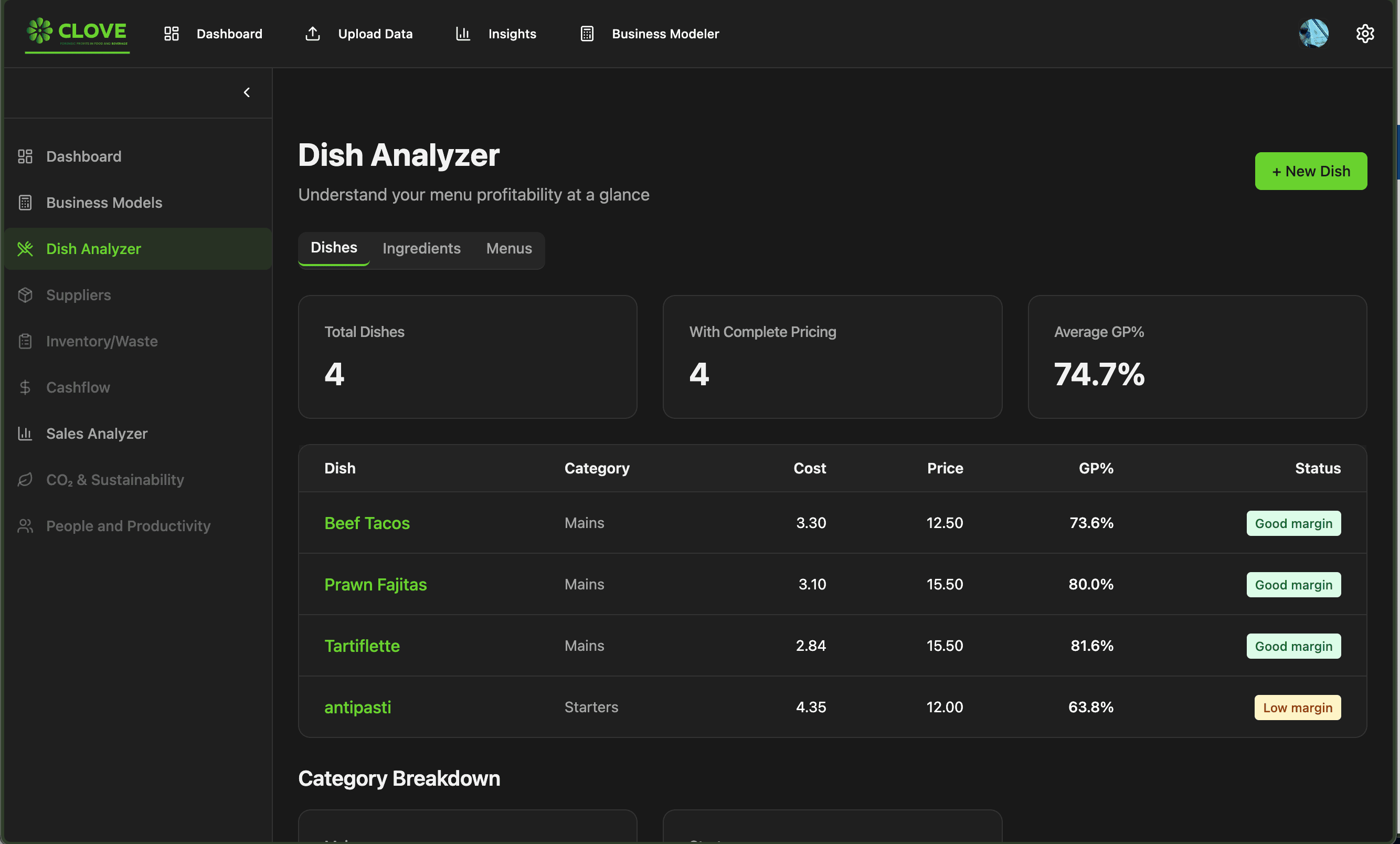
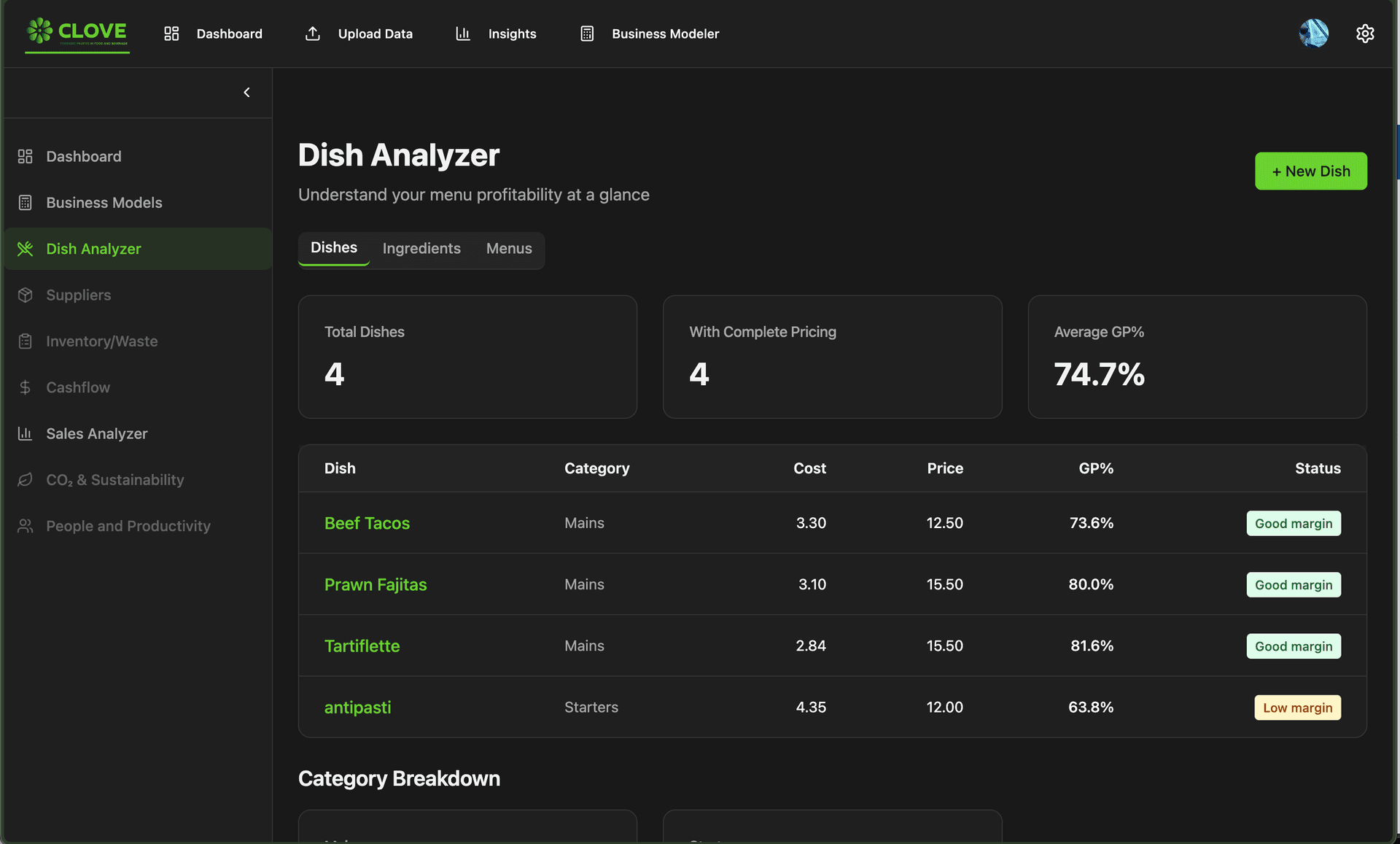
Cost dishes, track GP, and keep execution aligned with your plan.
Step 5
Maintain Control
A weekly read on margin drift — what moved, where attention is needed, and whether reality still matches the plan.
One thread: plan → dishes → sales → Signals
The Quick Model asks whether the idea roughly works. Inside Clove you lock an operating model, cost the menu, and bring sales in — then weekly Signals show whether reality still matches the plan.
Three ways margin usually drifts
Before a lease. During a busy season. Or when the numbers have felt “roughly right” for too long.
“I have an idea.”
Thinking about opening? Launching something new? Changing direction?
Before leases.
Before loans.
Before hiring.
- •Test pricing assumptions
- •Stress staffing structure
- •See real break-even
- •Understand margin viability
“We’re busy… but are we profitable?”
Revenue is coming in. But cash feels tight.
Margins look fine on paper. Are they actually?
- •Check dish margins properly
- •Break down real cost layers
- •See where assumptions hide losses
- •Understand if your targets are truly safe
“I think I know my numbers.”
Most operators believe they know their margins.
Few have tested them properly.
Ingredient by ingredient.
Labour assumption by labour assumption.
Service by service.
“Roughly right” is harder to defend when costs keep moving.
If none of these sound like you, Clove probably isn’t for you.
This isn’t a budgeting template. It’s operational margin visibility.
If you’re already certain your numbers are solid, you won’t need it.
One pricing mistake can cost more than a year of Clove.
If a dish is underpriced by €1 and you sell 30 a day, five days a week — that is over €7,000 a year. Most margin loss is not dramatic. It drifts: supplier moves, portion creep, labour assumptions, pricing that never quite caught up. €19 per month after setup. Cancel anytime.